
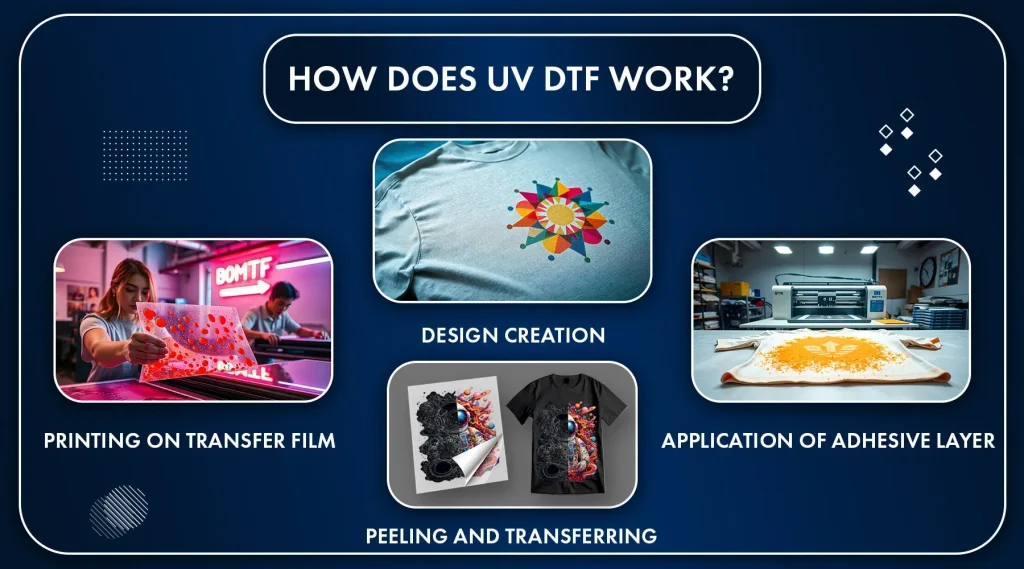
UV DTF transfer combines the flexibility of film-based printing with the hard-wearing performance of UV-curable inks for DTF. In this UV DTF transfer 101 guide, you’ll learn what this technology is, how it works, and why it matters for apparel brands, small shops, and DIY crafters alike. To understand how UV DTF works, follow a simple workflow—from design and printing on a PET film to curing and heat-press transfer that bonds the image to fabric. When you compare UV DTF vs traditional DTF, you’ll notice differences in ink chemistry, curing requirements, and potential durability. With proper curing and finishing, the durability of UV DTF transfers can endure repeated wash cycles and daily wear, making this method a compelling option for many brands.
An alternative description of this approach is UV-printed film transfer for fabrics, a fusion of digital artwork and film-based applique. From an LSI perspective, related terms such as film-on-substrate printing, light-cured textile graphics, and adhesive-coated transfer films help describe the same workflow. This framing emphasizes color fidelity, rapid curing, and durability across a wide range of textiles.
UV DTF transfer: What it is and how it differs from traditional DTF
UV DTF transfer combines the versatility of direct-to-film with the precision of UV-curable inks to create durable, vibrant designs on fabrics. The technique prints onto a PET film using UV-curable inks and then transfers the image to garments with heat, offering sharp details, strong color reproduction, and a bond that stands up to daily wear. This approach aligns with the UV-curable ink family, delivering fast cures and a robust print that resists cracking and fading when properly finished.
In a UV DTF transfer 101 context, the key differentiators are the ink chemistry, film construction, adhesive layer, and curing step. Compared with traditional DTF, UV DTF typically yields crisper edges, broader color gamut, and often stronger adhesion on a wider range of fabrics. The film-based workflow also enables reusing prints for multiple colors or placements, contributing to production flexibility and efficiency.
How UV DTF works: from design to finished transfer
Design and preparation start the process: high-resolution artwork is color-corrected and mirrored if needed to account for the transfer to fabric. Color management and print sizing are essential, especially when using UV-curable inks for DTF, to ensure accurate reproduction across batches.
The core workflow proceeds with printing onto PET film using UV-curable inks, followed by a curing step that can be quick or optional depending on the system. After curing, the garment is prepared, placed on a heat press, and the film is transferred to fabric through a controlled combination of temperature, time, and pressure. A peel (cold or warm) then reveals the final design, with post-press curing sometimes used to maximize adhesion and durability.
UV-curable inks for DTF: benefits, color, and durability
UV-curable inks for DTF offer a broad color gamut, high detail, and fast curing, which translates into higher throughput and more consistent printing. The chemistry supports crisp edges, strong color saturation, and good resistance to washing when fully cured, contributing to the overall durability of UV DTF transfers.
While UV-curable inks bring many advantages, practitioners should consider ink longevity, substrate compatibility, and storage conditions. Proper curing energy and exposure are essential to prevent issues such as color bleed or brittleness, and compatibility with different films, primers, and adhesives influences the final look and feel on various fabrics.
UV DTF vs traditional DTF: key differences in performance
A central comparison is the ink system: UV DTF uses UV-curable inks that cure instantly under UV light, while traditional DTF often relies on solvent or water-based inks requiring post-print curing. This difference can lead to faster production cycles and a stronger, more water-resistant film with UV-cured systems.
Color, adhesion, and durability are also impacted. UV DTF prints frequently show crisper edges and deeper color saturation on diverse fabrics, along with potentially stronger adhesion from the cured film and adhesive chemistry. Equipment needs and upfront costs differ as well, with UV DTF setups requiring UV curing units in addition to printers, whereas traditional DTF emphasizes heat presses and standard curing processes.
Practical tips to maximize print quality and long-term durability
Begin with high-quality artwork and proper color management. Use vector elements for logos and ensure imagery is high resolution, with calibrated ICC profiles tailored to your printer, ink, and film combination. Documenting settings from test runs helps reproduce consistent results across batches.
Optimizing print and cure settings is crucial. Run test prints to dial in ink density, cure time, and energy, then validate fabric preparation, heat press parameters, and post-processing steps. Pre-wash fabrics when appropriate, ensure uniform heat distribution, and perform wash tests to verify colorfastness and adhesion over multiple cycles.
Applications, troubleshooting, and future trends in UV DTF transfer
UV DTF transfers are well-suited for fashion and streetwear, promotional apparel, event merchandise, and on-demand capsule drops. The ability to render complex color gradients and photographic imagery on a variety of fabrics makes it attractive for limited runs, sample production, and personalized items where color fidelity and durability matter.
Common challenges include peeling, color bleeding, gloss on dark fabrics, and inconsistent adhesion across fabrics. Troubleshooting emphasizes proper curing, adhesive choices, and fabric pre-treatment. Looking ahead, ongoing improvements in ink chemistry, film technology, and curing equipment are expected to enhance color stability, speed, and substrate compatibility, keeping UV DTF transfer a competitive option for garment decoration.
Frequently Asked Questions
In UV DTF transfer 101, what is UV DTF transfer and how does it work?
UV DTF transfer uses UV-curable inks printed on a PET film that is heat-transferred to fabrics. The UV cure happens instantly, producing sharp details and strong adhesion, with a durable finish. This approach supports a wide range of fabrics and is a core topic in UV DTF transfer 101.
How UV DTF works in a typical workflow?
Key steps include designing high-resolution artwork, printing onto PET film with UV-curable inks, optional interim curing, preparing the garment, transferring the print with heat and pressure, and completing with the correct peel and post-press finishing.
What are UV-curable inks for DTF and why are they important for UV DTF transfer quality?
UV-curable inks for DTF are inks that cure instantly under ultraviolet light, yielding crisp edges, vibrant color, and strong adhesion. They drive color accuracy, detail, and wash-fast durability in UV DTF transfers.
UV DTF vs traditional DTF: what are the key differences?
UV DTF uses UV-curable inks that cure instantly, often enabling crisper edges and higher color saturation, with strong adhesion and durable results. Traditional DTF typically uses solvent or water-based inks and requires different curing steps, affecting speed, substrate compatibility, and equipment needs.
What affects the durability of UV DTF transfers and how can you improve it?
Durability depends on proper curing, substrate compatibility, and post-press handling. Ensure adequate cure strength, select appropriate fabrics, follow care guidelines, and optimize heat and pressure during transfer to improve wash-fastness and longevity.
What practical steps maximize print quality and durability in a UV DTF transfer workflow?
Use high-quality artwork and color profiles; calibrate ICC profiles for your ink, film, and printer; run test prints to tune saturation and cure settings; prepare fabrics properly; rely on a reliable heat press with even temperature; allow prints to cool and perform wash tests to verify durability.
| Aspect | Key Points |
|---|---|
| What is UV DTF transfer? |
UV DTF transfer uses UV-curable inks on a transfer film, which is heat-pressed onto fabrics. The UV curing process hardens the ink instantly, producing sharp details and a strong bond to fabrics. The DTF portion stands for direct-to-film—a technique where the printed film is later transferred to the garment, enabling vibrant designs on cotton, blends, and polyesters. |
| UV DTF transfer 101 perspective |
Key differentiators from traditional DTF and sublimation include four interconnected pieces: ink type (UV-curable vs solvent-based or water-based), film composition, adhesive layer on the transfer, and the curing process. Understanding these components helps predict outcomes and optimize workflows for production or hobby projects. |
| How it works: core steps |
|
| Key factors influencing outcomes |
|
| Advantages |
|
| UV DTF vs traditional DTF |
|
| Choosing the right workflow |
|
| Practical tips |
|
| Common challenges and troubleshooting |
|
| Applications and industries |
|
| Future trends and considerations |
|
| Conclusion |
UV DTF transfer summarizes a powerful convergence of direct-to-film printing and UV-curable technology. By understanding what UV DTF transfer is, how it works, and why it matters, you can decide whether this method aligns with your design goals, fabrics, and production needs. The UV DTF transfer 101 framework helps you evaluate color accuracy, durability, and overall print quality. With optimized ink chemistry, film selection, curing, and pressing parameters, designers and manufacturers can achieve vibrant, durable designs for daily wear on a wide range of fabrics, meeting the demands of limited editions, brand drops, or custom orders. |
Summary
UV DTF transfer is redefining garment decoration by combining direct-to-film printing with UV-curable inks, delivering vibrant, durable designs that withstand daily wear and washing. This method offers a film-based workflow, rapid curing, broad fabric compatibility, and strong color reproduction, making it suitable for fashion brands, small shops, and DIY crafters. When deciding between UV DTF transfer and traditional methods, consider your target fabrics, production volume, budget, and desired color fidelity. With careful calibration of ink chemistry, film choice, curing, and pressing parameters, UV DTF transfer can provide high-impact graphics with excellent wash durability for short runs, limited editions, or personalized orders.