
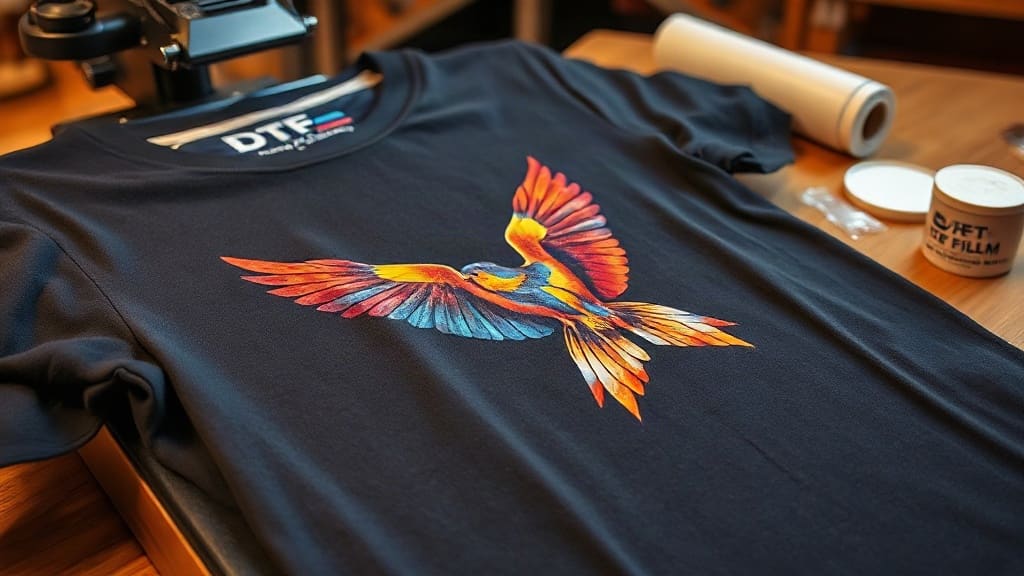
If you're in the custom apparel business or just love creating personalized shirts, you've probably heard about DTF transfers. This technology has taken the industry by storm, offering a versatile and cost-effective way to print vibrant designs on various fabrics. But what exactly are they? How do they work? And why should you consider them? In this comprehensive guide, we'll dive deep into the world of DTF transfers, answering all your questions and providing practical tips to help you get the best results.
What Are DTF Transfers?
DTF transfers (Direct to Film) are a type of heat transfer where a design is printed onto a special PET film using a DTF printer and then transferred onto fabric using a heat press. Unlike traditional methods like screen printing or heat transfer vinyl (HTV), DTF allows for high-resolution, full-color prints with no need for weeding or separate layers. The process involves printing a mirrored image on the film, applying adhesive powder to the wet ink, and then curing it. After that, the transfer is ready to be pressed onto a garment.
How DTF Transfers Work
The DTF printing process is surprisingly straightforward, but it requires specific equipment and materials. Here's a step-by-step overview:
- Printing: A DTF printer uses pigment inks (typically CMYK plus white) to print the design onto a coated PET film. The white ink is crucial because it acts as a base for the colors, ensuring they pop on dark fabrics.
- Adhesive Powder Application: While the ink is still wet, a hot-melt adhesive powder is applied to the film. This powder sticks only to the printed areas and will later fuse with the fabric during heat pressing.
- Curing: The film with the powder is then passed through a heat tunnel or oven to partially melt the powder, bonding it to the ink. This step makes the transfer stable and ready for storage.
- Heat Pressing: To apply the transfer, you place it (powder side down) onto the fabric and press it with a heat press at around 160-170°C (320-338°F) for 15-20 seconds. After peeling off the film while still warm, your design is permanently embedded in the fabric.
Benefits of DTF Transfers
Why have DTF transfers become so popular? Here are some key advantages:
- Versatility: You can print on almost any fabric: cotton, polyester, blends, even nylon and leather. There's no need for special pretreatment except for certain materials like 100% polyester with low absorbency.
- High Detail: Because it uses digital printing, you can achieve intricate designs with gradients, photos, and fine lines that would be difficult or impossible with traditional methods.
- No Weeding: Unlike HTV, you don't have to manually cut and weed excess vinyl. The entire design prints as one piece, saving time and labor.
- Soft Hand Feel: The ink and adhesive layers are thin, resulting in a soft, flexible print that doesn't crack easily.
- Cost-Effective for Small Runs: There's no setup cost, so you can print one or many pieces at the same price per item. This makes it perfect for custom orders and print-on-demand businesses.
- Durability: DTF transfers are resistant to washing and stretching, often lasting as long as the garment itself.
DTF Transfers vs. Other Methods
To truly appreciate DTF transfers, it helps to compare them with other popular techniques.
DTF vs. Screen Printing
Screen printing is still the go-to for large bulk orders because it offers the lowest cost per unit for massive quantities. However, it requires significant upfront setup (screens, emulsions) and is not practical for small runs or complex, multi-colored designs. DTF is faster to set up and allows for more detail, making it ideal for short runs and custom jobs.
DTF vs. Heat Transfer Vinyl (HTV)
HTV is great for simple designs with few colors and requires manual cutting and weeding. It's labor-intensive and not suitable for photographic images. DTF eliminates these steps and delivers superior quality with no additional effort.
DTF vs. Direct-to-Garment (DTG)
DTG prints directly onto the shirt using inkjet technology. While it provides excellent quality, it's slower for bulk orders and requires pretreatment for optimal results, especially on dark fabrics. DTF can be pre-printed and stored, allowing for on-demand printing without holding inventory. Additionally, DTF works better on polyester and blends than DTG.
Getting Started with DTF Transfers
If you're ready to start using DTF transfers in your business, here's what you'll need:
- DTF Printer: A modified Epson or dedicated DTF printer with a white ink circulation system. Entry-level models start around $2,000, while professional ones can cost over $10,000.
- PET Film: Specially coated film that absorbs the ink and releases cleanly after pressing.
- Adhesive Powder: There are different types for different fabrics; choose one that matches your needs (e.g., for polyester, use a low-temperature adhesive).
- DTF Inks: Pigment-based inks that are water-resistant after curing. The white ink is especially important for opacity.
- Heat Press: A quality heat press with precise temperature control and even pressure is essential.
- Shaker and Curing Oven: To apply the powder and cure the transfers, you can invest in a powder shaker and a heat tunnel. However, for small-scale operations, you can manually apply powder and use a heat press to cure.
Step-by-Step Guide to Applying DTF Transfers
Once you have your transfers (either made in-house or purchased from a supplier), the application process is simple:
- Preheat the garment for a few seconds to remove wrinkles and moisture.
- Position the transfer on the fabric with the film side up (the powder side is facing down).
- Press: Use a heat press set at about 160-170°C (320-338°F) with medium pressure. Press for 15-20 seconds. The exact time might vary, so always test on a scrap piece first.
- Peel: Hot peel is standard for DTF transfers. Immediately after pressing, carefully peel the film away. If you wait too long, the ink might stick to the film.
- Cool and finish: Let the print cool completely before handling or washing.
Tips for Perfect DTF Transfers
Getting professional results requires attention to detail. Here are some expert tips:
- Test, test, test: Always run a test print and press before doing a full order. This ensures your settings are correct for the specific fabric and transfer.
- Mind the temperature: Too low, and the adhesive won't bond; too high, and you risk scorching the fabric or melting the film. Use a heat gun or laser thermometer to verify your press temperature.
- Pressure matters: Even pressure is crucial for full adhesion. If your press is not even, you'll get areas that peel off.
- Use the right powder: For dark garments, you might need extra white ink coverage. For stretchy fabrics, a stretchable adhesive powder is better.
- Store transfers properly: Keep them in a cool, dry place away from direct sunlight. They can last for a long time if stored correctly.
Common Problems and Solutions
Even experienced printers face issues. Here are some common problems with DTF transfers and how to fix them:
- Poor adhesion or peeling: This is often due to low pressure, low temperature, or insufficient pressing time. Increase the temperature slightly or extend the press time by a few seconds.
- White ink showing through: If the white base is too thick or the design is light-colored, you might see a white edge. Ensure your white underbase is only as thick as necessary.
- Washing out: If the print cracks or fades after washing, it might be because the transfer wasn't cured properly during production, or the pressing wasn't hot enough. Always follow the recommended curing times.
- Film sticking and not peeling: This happens if you wait too long after pressing or if the temperature is too high. Peel immediately and adjust your settings.
Where to Buy DTF Transfers
If you don't want to invest in printing equipment, you can buy ready-made DTF transfers from suppliers. Many companies offer custom transfer services where you send your design and they print and ship the transfers to you. This is an excellent option for small businesses that want to test the waters without a large upfront investment. When choosing a supplier, consider their quality, turnaround time, and minimum order quantities.
Frequently Asked Questions
Can DTF transfers be used on 100% cotton?
Yes, DTF transfers work beautifully on 100% cotton. The adhesive bonds well with natural fibers, and the print is soft and durable. Just make sure to use the correct pressure and temperature settings.
How many washes can DTF transfers withstand?
With proper application, DTF transfers can last for 50 or more washes without significant fading or cracking. To maximize longevity, wash the garment inside out in cold water and avoid using bleach or fabric softeners.
Do DTF transfers work on dark colors?
Absolutely. The white ink underbase ensures that the design pops on dark fabrics. This is one of the biggest advantages over other methods like sublimation, which only works on white or light-colored garments.
What is the difference between hot and cold peel DTF?
Hot peel means you remove the film immediately after pressing, while cold peel requires waiting for the transfer to cool down. Most DTF transfers are hot peel, which speeds up production. Cold peel transfers might be used for certain special films or when extra gloss is desired.
Can I use DTF transfers on polyester?
Yes, but you need to be careful. Polyester has a lower melting point, so you should use a lower pressing temperature (around 150°C) and reduce pressing time. Also, use a polyester-specific adhesive powder to prevent dye migration and ensure durability.
Conclusion
DTF transfers have revolutionized the custom printing industry, offering a perfect blend of quality, versatility, and efficiency. Whether you're a hobbyist or a business owner, understanding this technology can open up new possibilities for your creative projects. With the right equipment and techniques, you can produce professional-grade prints that will impress your customers and stand the test of time. So why not give DTF transfers a try? Your next custom garment could be just a press away.