
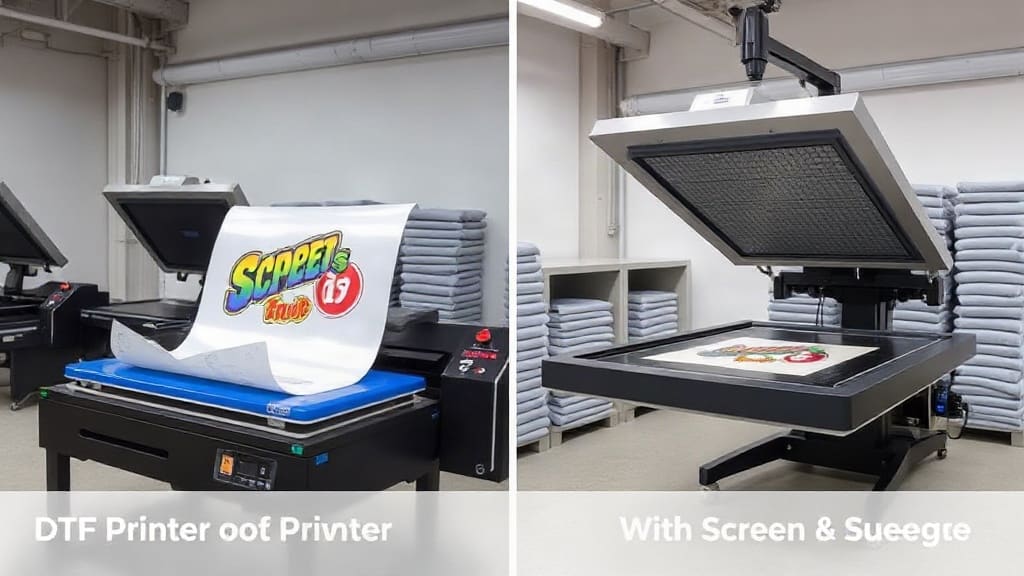
Choosing the right printing method for your custom apparel can make or break your business. Two popular options are DTF transfers and screen printing. Both produce vibrant designs, but they differ significantly in setup, cost, and workflow. In this guide, I'll share practical insights from years of working in the industry to help you decide which method aligns with your goals.
What Are DTF Transfers?
DTF (Direct to Film) transfers involve printing your design onto a special PET film using a DTF printer. The printed film is coated with adhesive powder, cured, and then heat-pressed onto the garment. This method has gained huge popularity because it requires minimal setup and works on a variety of fabrics.
How DTF Works: Step by Step
- Create your design file and print it onto PET film with a DTF printer.
- Apply hot-melt adhesive powder to the wet ink.
- Heat-cure the powder to activate the adhesive.
- Place the transfer on the garment and press with a heat press.
- Peel the film (hot or cold, depending on the product) to reveal the design.
Key Benefits of DTF Transfers
- No screen setup: perfect for small orders and one-off designs.
- Vibrant colors and high detail, including gradients and photos.
- Works on cotton, polyester, blends, and even performance fabrics.
- Stretchy and soft hand feel, especially with quality films.
- Quick turnaround: you can go from file to finished shirt in minutes.
What Is Screen Printing?
Screen printing, also known as silkscreen, is a traditional method where ink is pushed through a mesh stencil onto the fabric. It requires a separate screen for each color, making setup time and cost higher. However, it remains a favorite for bulk orders because of its durability and cost-effectiveness at scale.
The Screen Printing Process
- Prepare each color as a separate screen with a stencil.
- Set up the screens on a press, aligning them for registration.
- Apply ink through each screen sequentially.
- Cure the ink using a dryer or heat.
- Inspect and finish the garment.
Critical Differences: DTF vs Screen Printing
To make an informed decision, you need to compare them across several dimensions. Let's break down the most important factors.
Setup Time and Cost
Screen printing requires significant setup: creating screens, burning stencils, and aligning colors. This makes it impractical for small runs. In contrast, DTF transfers need only a digital file and a printer, so setup is nearly zero. If you're printing one shirt or a dozen, DTF is far more efficient.
Order Quantities and Pricing
Screen printing shines when you order in bulk. The per-unit cost drops dramatically after the initial setup, so printing 500 shirts becomes very economical. DTF transfers have a consistent per-unit cost, meaning they're pricier for large quantities. For low-volume orders (under 50 pieces), DTF is usually cheaper; for high-volume, screen printing wins.
Durability and Feel
Screen printing is renowned for its durability; it can withstand hundreds of washes without fading. The ink sits on the fabric's surface, creating a slightly textured feel. DTF transfers have improved, but they may crack or peel over time if not applied correctly or if low-quality materials are used. Modern DTF films and powders offer excellent stretch and adhesion, but screen printing still edges out in longevity for heavy-duty use.
Color and Detail
DTF transfers excel at reproducing complex colors, gradients, and photorealistic details because they use full-color printing. Screen printing requires color separation, which can be challenging and sometimes loses fine details. For designs with many colors or intricate patterns, DTF is the clear winner.
Fabric Compatibility
DTF adheres well to a wide range of fabrics, including cotton, polyester, and blends. It even works on tough surfaces like nylon and leather. Screen printing is best on cotton and cotton blends; it struggles with synthetic fabrics because the ink doesn't bond well unless special additives are used.
Case Study: A Small Business Owner's Experience
Let me share a real example. A friend of mine runs a custom apparel shop. She started with screen printing and bought a 4-color press. She loved the quality but hated the cleanup and setup. When she began offering personalized items, like single shirts for birthdays, she switched to DTF. Now she uses DTF for quick orders and screen printing for bulk client work. This hybrid approach maximizes profit and client satisfaction.
This experience highlights that you don't have to choose one exclusively. Many businesses use both: DTF for small orders and prototypes, screen printing for large production runs.
Cost Comparison: DTF Transfers vs Screen Printing
To help you visualize, here's a rough cost breakdown per shirt for a 10x10 inch design on white tees. Keep in mind prices vary.
- DTF transfer (single): $3.50 - $6.00 per transfer.
- DTF transfer (bulk 100+): $2.50 - $4.00 each.
- Screen printing (first screen): $50 - $100 setup, plus $2.50 - $5.00 per shirt for 100 shirts.
- Screen printing (higher volume, 500): as low as $1.00 per shirt.
These numbers show that DTF is great for low quantities, while screen printing becomes more cost-effective as quantity increases.
How to Choose the Right Method for Your Business
Now that you know the differences, how do you decide? Ask yourself these questions:
- What is your average order size? If you often print less than 50 pieces per design, DTF is likely your best bet.
- Do your designs have many colors or gradients? If yes, DTF is easier.
- What fabric types do you print on most? DTF handles synthetics better.
- What is your budget for equipment? DTF printers start around $2,000, while a basic screen printing setup can be $1,500, but additional supplies add up.
- What is your timeline? DTF offers faster turnaround for small batches.
Best Practices for DTF Transfers
If you lean toward DTF, follow these tips to ensure professional results:
- Use high-quality PET film and adhesive powder to prevent cracking.
- Calibrate your printer regularly to maintain color accuracy.
- Test your press temperature and time with each garment type.
- For dark fabrics, ensure you use a white underbase or high-opacity film.
- Store printed transfers in a cool, dry place if not pressing immediately.
Best Practices for Screen Printing
If screen printing fits your niche, consider these:
- Invest in quality screens and emulsions to achieve crisp details.
- Use the right mesh count for your design: lower mesh for thick inks, higher mesh for detail.
- Maintain consistent pressure and angle during printing.
- Cure inks at the correct temperature to ensure durability.
- Set up a dedicated space with proper ventilation and cleaning supplies.
Final Thoughts: DTF Transfers or Screen Printing?
There's no universal answer. Both methods have their place. DTF transfers offer flexibility and ease for small to medium runs, while screen printing provides unbeatable economy for large quantities. By understanding your specific needs, you can choose the right tool for each job, or even combine them to serve a broader customer base.
Whichever path you choose, focus on delivering quality and consistency. Your reputation depends on it. If you're just starting, I recommend trying DTF first due to its lower barrier to entry. As you grow, you can invest in screen printing equipment to handle bigger orders.
Frequently Asked Questions
Can DTF transfers be used on any fabric?
Yes, DTF transfers work on a wide range of fabrics including cotton, polyester, nylon, and blends. However, for best results, always test on a sample piece first. The adhesive and film are designed to bond with most materials, but some specialty fabrics like waterproof or heavily coated surfaces might not adhere well.
How long do DTF transfers last compared to screen printing?
DTF transfers can last 50 to 100 washes if applied correctly and with quality materials. Screen printing typically lasts longer, often remaining vibrant for 100+ washes. The key is proper curing and pressing. You can extend the life of DTF by using a heat press with even pressure and following recommended temperature settings.
Is DTF printing cheaper than screen printing for small orders?
Yes, for small orders (e.g., under 50 pieces), DTF is generally cheaper because there's no setup cost. You pay only for the transfers and the garment. Screen printing has a high initial setup fee for screens, which makes it expensive for short runs.
What equipment do I need to start with DTF transfers?
To start with DTF, you need a DTF printer (or a converted Epson printer), PET film, adhesive powder, a heat press, and a curing oven or heat source for the powder. The initial investment can be around $2,000 to $5,000 for a basic setup, but it pays off quickly if you do frequent small orders.
Can I use DTF transfers for dark shirts?
Absolutely. DTF transfers are excellent for dark fabrics because they can include a white underbase layer that ensures the design pops. You just need to print a white layer first, then the colored layers on top, and apply the adhesive powder. Many DTF printers have white ink capability specifically for this purpose.